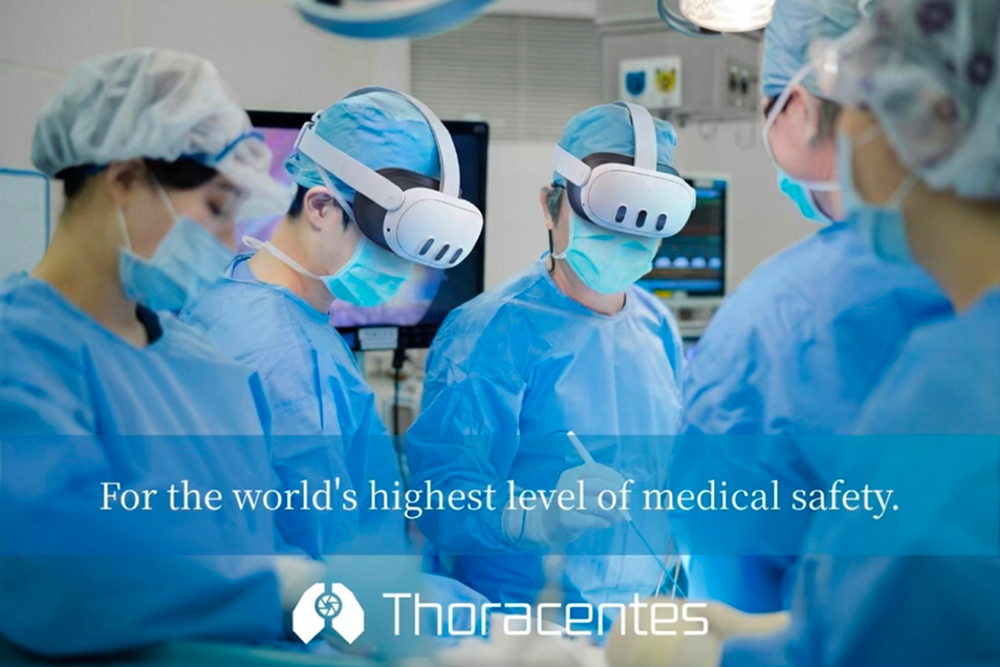
Thoracentes Inc. (CEO: Kenji Suzuki) is proud to announce that our medical imaging software, TH-ZEY, has received regulatory certification as a Class II medical device in Japan, effective April 1, 2026.
■ Medical Device Marketing Authorization Information
License Category : Type II Medical Device Marketing
Authorization License Number : 13B2X10621
Name of Principal Office : Thoracentes Inc.
Address of Principal Office : THE HILLS HONGO, 2-17-12 Hongo, Bunkyo-ku, Tokyo, Japan
■ Medical Device Information
Proprietary Name : Medical Imaging Software TH-ZEY
Generic Name : Software for Radiographic Diagnostic Workstation
Certification Number : 308AHBZX00017000
Medical Device Classification : Designated Controlled Medical Device (Class II)
Date of Certification : April 1, 2026
Concept
■ Background
In recent years, advancements in diagnostic imaging technology, such as CT scans, have enabled the routine use of high-definition, high-volume image data in clinical settings. However, as these images are primarily viewed on flat monitors, grasping complex internal anatomical structures from multiple cross-sectional images has remained a challenge—one that relies heavily on a physician’s advanced spatial recognition skills and extensive experience.
■ Intuitive Visualization in Real Space
“Medical Imaging Software TH-ZEY” is a medical device that reconstructs CT image data into 3D models and overlays organ information directly onto the physical environment via AR (Augmented Reality) display devices. This allows for intuitive, stereoscopic visualization in real space.
Thoracentes Inc. has focused on the rapid evolution of XR (Extended Reality) technology with the goal of expanding medical imaging from something that is “read on a flat surface” to something that is “perceived intuitively in space.” We remain committed to providing innovative solutions that enhance patient safety and reduce the burden on healthcare professionals.
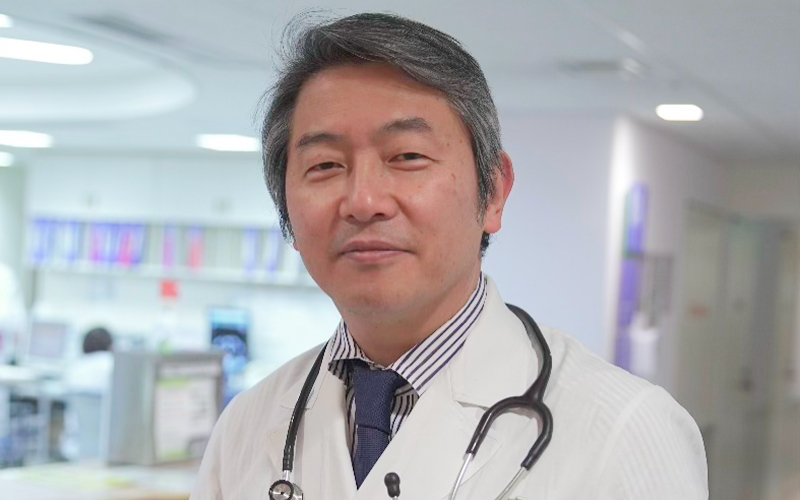
Kenji Suzuki, M.D.
CEO, Thoracentes Inc.
Professor, Juntendo University
“Turning Invisible Risks into Absolute Safety: From Japan, Pioneering a New Era of Medical Safety with AR Technology”
Taking a pulse, listening to a breath, observing a complexion—no matter how far technologies like CT or MRI advance, they will never surpass the “five senses” bestowed upon humanity. Listening to a heartbeat through a stethoscope or touching a pulse conveys a patient’s condition more eloquently than any objective data point. For instance, the sheer urgency of a patient’s “cold sweat” can only be truly grasped through the palm of a hand. This is the very essence of the “Hippocratic Oath” we swear upon entering the medical profession.
At the same time, medicine has continuously expanded its horizons through technology. Yet, it is a stark irony that the procedure known as “thoracic drainage”—said to have been first performed by Hippocrates himself—still carries risks nearly identical to those faced in Ancient Greece, even after more than two thousand years. This is because the modern “eye” of ultrasound cannot function effectively within the chest, where air interferes with its view.
In my thirty-odd years as a physician, the scenes of severe complications I have witnessed during thoracic drainage still flash before my eyes like a kaleidoscope. “Can we not change this situation with our own hands?” The answer to that question is the XR navigation system we have developed.
Our company name, Thoracentes Inc., is derived from thoracentesis, the Latin term for thoracic puncture. Our journey began under the banner of Juntendo University, fueled by the aspirations of many through crowdfunding. I remain profoundly grateful for the warm support we received; no words can fully express my thanks. I am certain that the souls of the patients who remain in my memory will live on through this technology, in the thousands and millions of lives that will be saved in the future.
By using Augmented Reality (AR) to “see through” the body, we visualize previously invisible risks. The ultimate beneficiaries of this technology are not only the surgeons but, more importantly, the patients and their families. We take this step with profound conviction toward realizing “Medical Safety from Japan, a New Global Standard.”